Most of the spread between two quotes for the same compound is not margin; it is length, synthesis difficulty, how hard the material was to purify, and how much testing came with it. Those costs are real and they are not evenly distributed across the catalogue. Understanding where they sit makes it possible to tell a genuinely competitive price from one that has quietly dropped something.
Where the cost actually sits
| Driver | Effect on cost |
|---|---|
| Chain length | Steep and non-linear — every residue is another full cycle, and yield compounds |
| Difficult sequences | Aggregation-prone stretches need slower couplings and repeat steps |
| Non-natural residues | D-amino acids, Aib and the like cost many times their natural equivalents |
| Bridges and cyclisation | A separate reaction with its own yield loss and its own purification |
| Purification to a higher spec | Each additional point of purity costs disproportionately more material |
| Analytical panel | Identity and purity are cheap; content, endotoxin and metals are not |
Why does length cost so much more than proportionally?
Because yield compounds. Solid-phase synthesis adds one residue per cycle, and each cycle completes at slightly less than 100%. At 99% per coupling a ten-residue peptide finishes around 91% of theoretical; a thirty-residue peptide around 74%; a fifty-residue peptide around 61%. Every missed coupling also produces a deletion sequence one residue short, which is chemically similar to the target and therefore expensive to separate.
So a longer peptide costs more twice over: less of it survives, and what survives is harder to clean up.
What makes one sequence harder than another of the same length?
Aggregation during synthesis. Certain stretches — runs of hydrophobic residues, particular secondary-structure-forming segments — cause the growing chain to fold against itself on the resin, which blocks the reagent from reaching the end. The coupling then runs slow or incomplete, and the fix is slower chemistry, repeated couplings, or a different solvent system, all of which cost time.
This is why two peptides of identical length can differ severalfold in price, and why the cost of a given sequence is not predictable from its formula alone.
Why does the last point of purity cost the most?
Because purification discards material. Getting from a crude mixture to 95% is mostly about removing things that behave very differently from the target. Getting from 95% to 99% means separating the target from species that elute close to it — a deletion sequence, an oxidised variant — and the only way to do that cleanly is to cut narrowly around the main peak and throw away the shoulders.
The yield penalty is the cost. A tighter cut means a purer product and less of it, and that trade is most of why a 99% specification prices above a 95% one for the same synthesis.
What a cheap quote has usually left out
Price differences that cannot be explained by the drivers above are usually explained by scope. Four things commonly go missing, in rough order of how often.
- Lot-specific testing. A generic certificate for the compound costs nothing to reproduce. A document tied to your lot number means that batch was actually tested, which is a real expense per batch.
- Content as well as purity. Purity by area is cheap. Net peptide content requires amino acid analysis or nitrogen determination, which is a separate measurement most low-cost listings skip.
- The safety panel. Endotoxin, residual solvent and heavy metals are each a separate instrument and a separate fee.
- Fill accuracy. Filling a small vial accurately is harder than it sounds, and a wide tolerance is cheaper to hold than a narrow one.
What length looks like across a real catalogue
The clearest way to see the cost curve is to line up compounds of different lengths and notice that price tracks the chemistry rather than the popularity.
| Compound | Residues | What that implies for synthesis |
|---|---|---|
| Vilon | 2 | Two couplings; essentially trivial to assemble and purify |
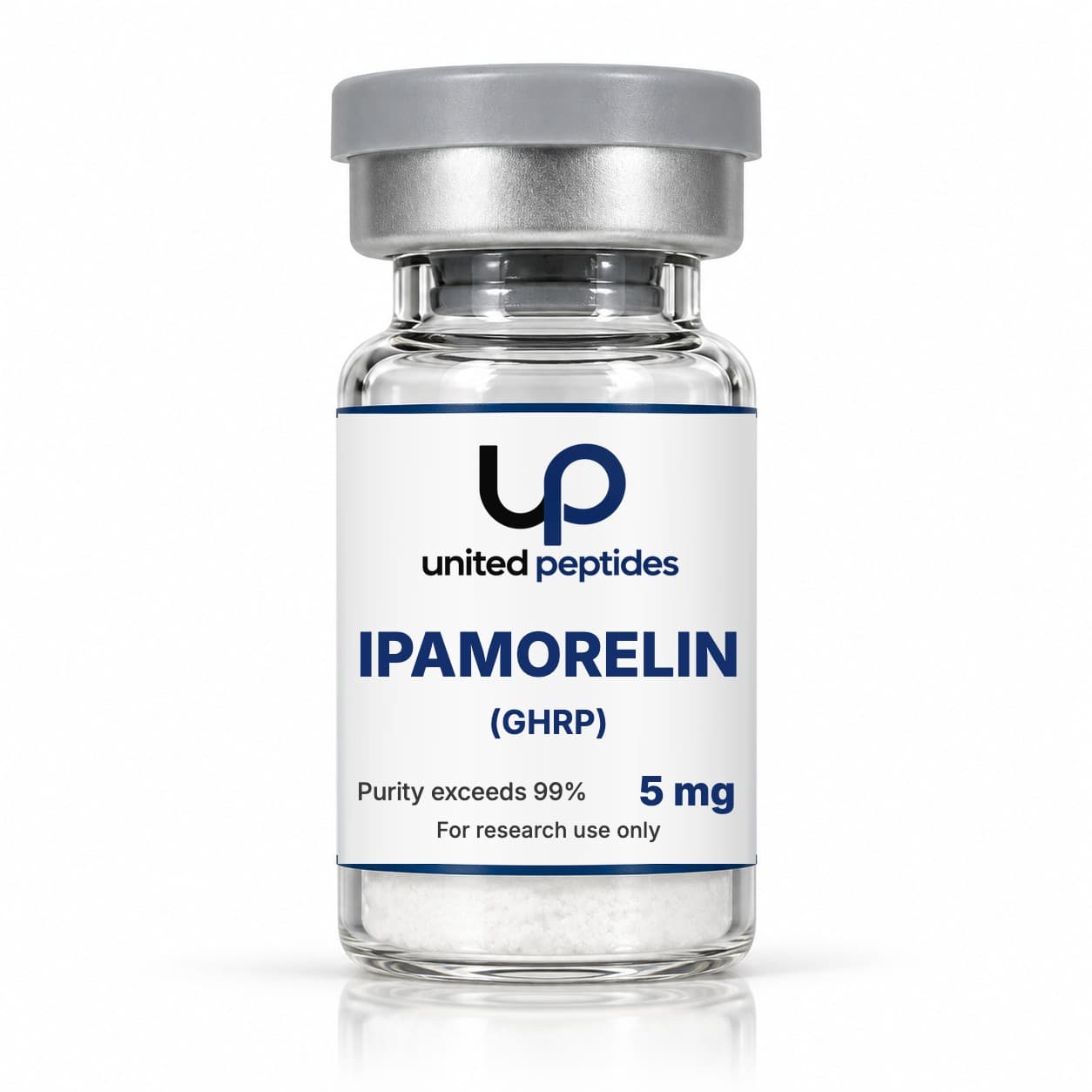
| Ipamorelin | 5 | Short, but three non-natural residues raise reagent cost |
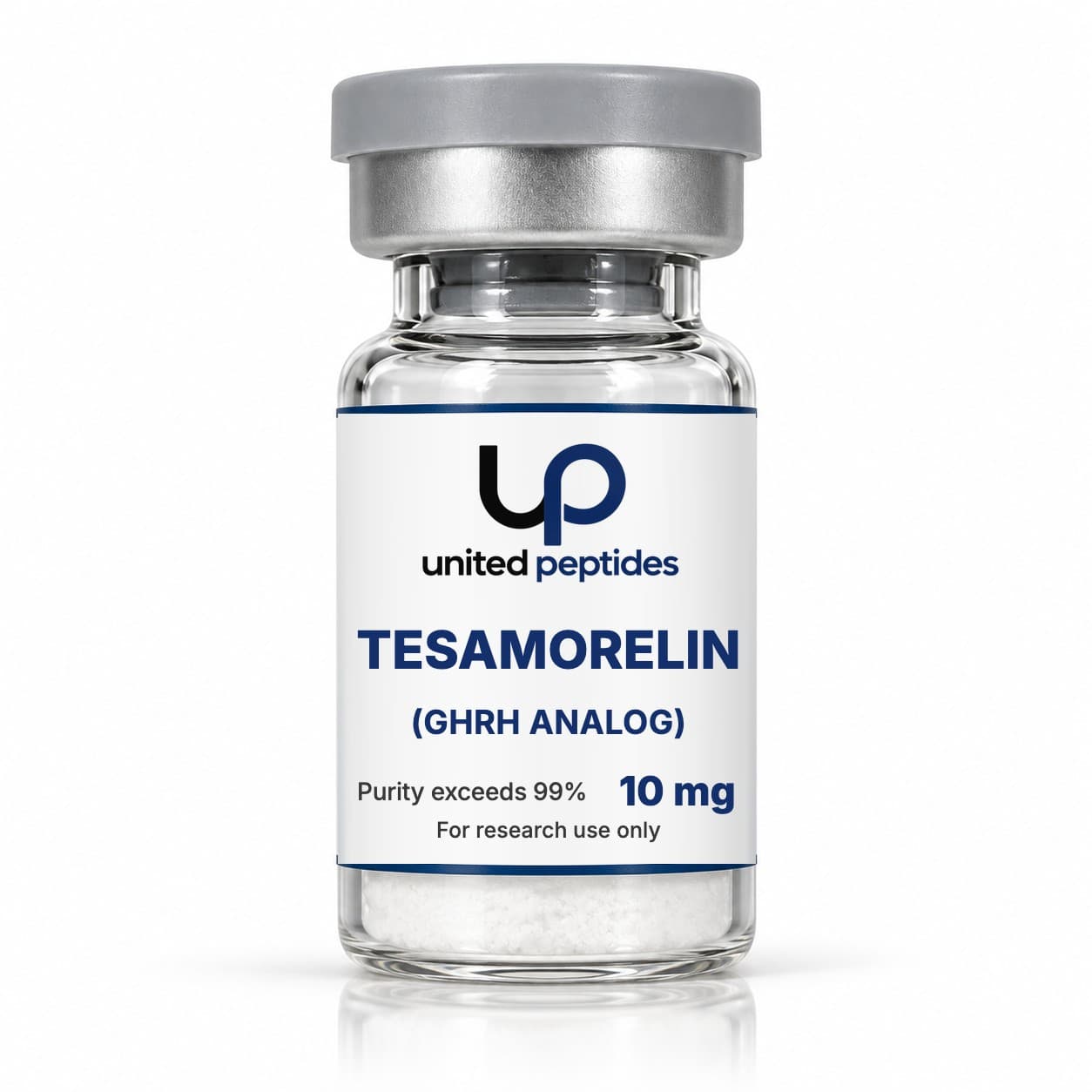
| Tesamorelin | 44 | Long; yield compounds heavily and deletions are hard to resolve |
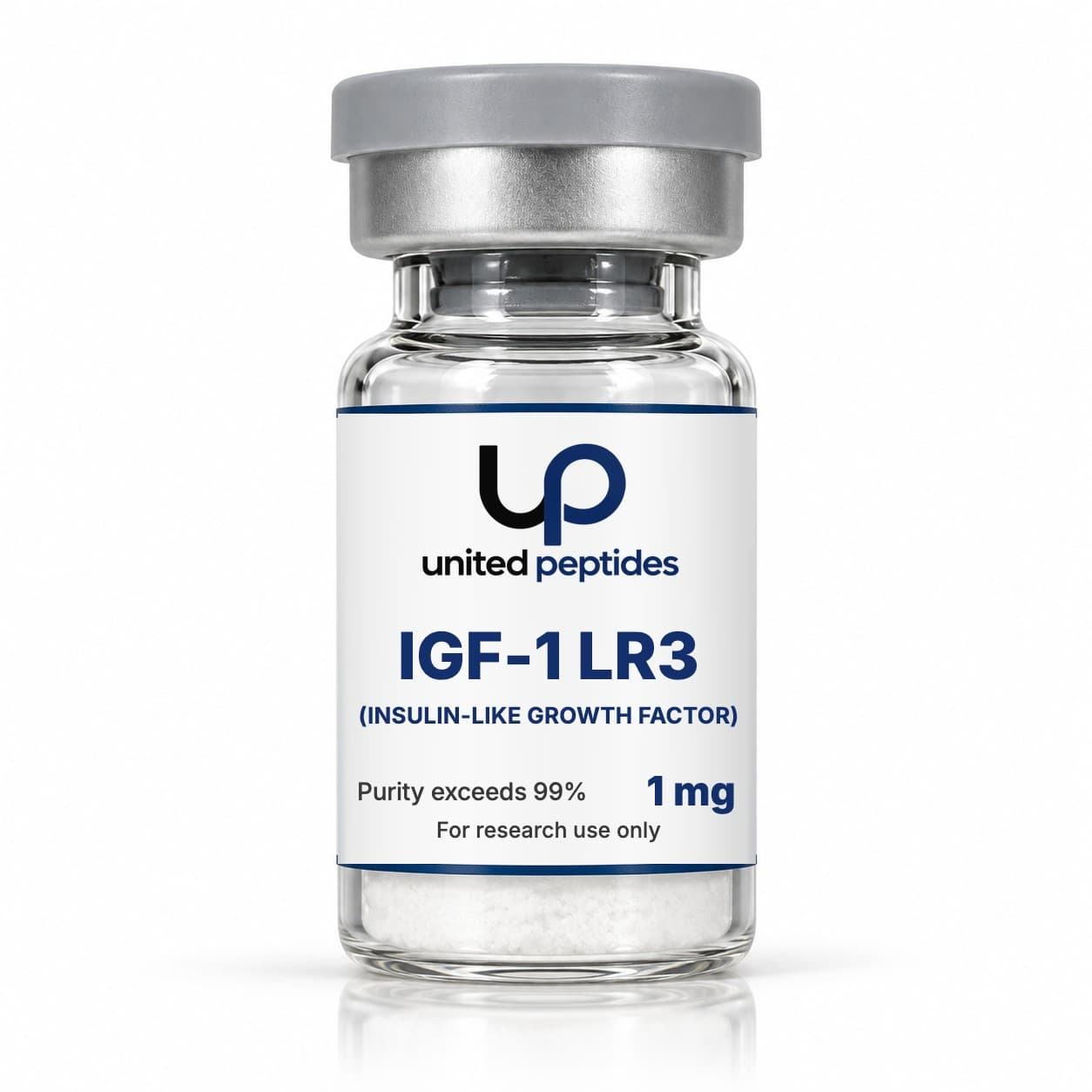
| IGF-1 LR3 | 83 | Beyond practical stepwise synthesis for most routes |
Ipamorelin is the instructive row. It is one of the shortest peptides in common use and it is not the cheapest, because D-configured and non-natural residues cost many times their ordinary equivalents and the molecule carries three of them. Length is the dominant driver, not the only one.
At the other end, an 83-residue chain is long enough that stepwise synthesis stops being the sensible route at all. Where a product in that range exists, something other than straightforward solid-phase assembly is usually behind it, and the cost structure is different in kind rather than in degree.
Why do two vials of the same compound differ in price?
Fill size, almost always. The synthesis and the analytical panel are largely fixed costs for a batch, so spreading them over 10 mg instead of 5 mg lowers the cost per milligram without anything about the material changing. Glass, caps, labelling and filling are nearly identical either way.
That is a genuine economy rather than a discount, which is why the per-milligram gap between sizes is usually consistent across a catalogue. Whether to take it depends on how quickly the material will be used, since a larger vial entered repeatedly accumulates moisture and handling that a smaller unopened one avoids.
Is a low price a reason to walk away?
Not by itself — a shorter, easier peptide genuinely is cheaper to make, and a supplier with good throughput genuinely can sell it for less. What is worth distrusting is a low price on a long or difficult sequence, because the chemistry does not get cheaper to order in bulk in the way that packaging does.
The more useful test is not the number but what comes with it. Ask whether they can produce the certificate for the lot you will receive. A supplier who can has paid for the part that costs money; one who cannot has found a way not to, and the saving is coming from somewhere.
Why are blends priced differently from their components?
Because co-formulation is an extra operation with its own failure modes. The components have to be combined at a controlled ratio, dried together, and then tested per component rather than once — identity, purity and content for each, plus the ratio itself. That is a longer analytical panel than a single compound needs, and it is the main reason a blend does not price as the simple sum of its parts.
Does a bigger vial always cost less per milligram?
Usually, because the synthesis and the testing are largely fixed costs spread over more material, while filling and glass are nearly the same either way. That is a real saving rather than a volume discount in the retail sense. Whether it is the right choice depends on how fast the material will be used, since a larger vial opened repeatedly is exposed to moisture and handling that a smaller unopened one is not.
Does buying more at once actually save money?
Usually yes, and for a reason worth distinguishing from a retail discount. The synthesis run, the purification and the analytical panel are costs of making a batch, not costs of making a milligram, so a larger order spreads them further. That saving is real and it is not a concession.
What it does not do is reduce risk. A single large lot means a single impurity profile and a single content figure across everything that uses it, which is an advantage for comparability and a disadvantage if that lot turns out to be atypical. Bridging between lots is work; having only one lot removes that work and concentrates the exposure.
For a programme that will run for months, one lot aliquoted at the start is usually the right call. For exploratory work where the compound may not be used again, it is money spent on consistency nobody will need.
What should a quote include besides a number?
The fill size, the purity specification, and which analytical panels the price covers. Those three turn a figure into something comparable; without them, two quotes are not measuring the same thing and the cheaper one may simply be a smaller scope.
A quote that specifies 10 mg at a stated purity with identity, purity and content reported per lot can be set against another on the same terms. One that gives a compound name and a price cannot, and the difference between them is usually where the saving is hiding.
The broader point is that price in this market is mostly a readout of chemistry and scope rather than of brand. A long sequence with non-natural residues, purified tightly and tested per lot, costs what it costs, and no supplier is able to discount the synthesis itself. Where a price looks anomalous in either direction, the explanation is almost always in one of those variables, and asking which one turns a confusing quote into a comparable one.
All products referenced here are supplied for laboratory and research use only. They are not drugs, foods, supplements or cosmetics, and are not for human or veterinary use.