The digestive tract is not an obstacle a peptide has to get past; it is a system designed specifically to take peptides apart. That is its function. Dietary protein is reduced to amino acids and short fragments so the body can absorb them, and a peptide arriving in that environment is indistinguishable from food. The barrier is chemical before it is anything else, which is why it is so difficult to engineer around.
Three stages, each removing a different thing
A peptide entering the stomach meets a sequence of systems rather than a single one, and surviving any individual stage is not enough.
| Stage | Conditions | What it does to a peptide |
|---|---|---|
| Stomach | Strongly acidic; pepsin | Acid-driven unfolding, then cleavage at hydrophobic residues |
| Small intestine | Near neutral; trypsin, chymotrypsin, elastase | Cleavage at defined residues — trypsin after Lys and Arg |
| Brush border | Peptidases on the cell surface | Short fragments trimmed from the ends to single residues |
| Epithelium | A tight cell layer | Large, charged molecules cross poorly even intact |
The structure of that sequence is what makes it so effective. Endopeptidases cut in the middle of a chain, producing fragments; exopeptidases then work inward from the new ends. Every cut creates two fresh termini for the next enzyme, so the process accelerates as it proceeds.
Why is cleavage at specific residues rather than random?
Because each enzyme has a binding pocket shaped for a particular side chain. Trypsin cuts after lysine and arginine because its pocket holds a positive charge; chymotrypsin prefers the large aromatic residues. That specificity is what makes the system predictable — and it is also what makes it possible, occasionally, to design around.
It means a sequence can be read for where it will be cut. A chain dense in lysine and arginine presents many trypsin sites; one without them presents none, though it will still meet the other enzymes and the barrier behind them.
How quickly does this happen?
Fast enough that transit time is not the limiting factor. Gastric emptying takes on the order of hours and intestinal transit longer, while proteolysis of an unprotected peptide proceeds on a timescale of minutes once it meets the relevant enzyme at working concentration. A molecule does not slip through because it moved quickly; the chemistry has ample time.
That asymmetry is why the engineering has to block the reaction rather than outrun it, and why a modification that merely slows cleavage somewhat tends not to change the outcome.
Does the epithelial barrier matter if the enzymes are dealt with?
Yes, and it is the reason the problem is harder than it first looks. Even an intact peptide faces a tight cell layer that admits small, uncharged, lipophilic molecules far more readily than large charged ones. Peptides are usually large by that standard and frequently charged, so passive crossing is poor regardless of how well the molecule resisted digestion.
That is why solving only the stability half does not produce an absorbable peptide. The two obstacles are independent and both have to be addressed.
What engineering has actually changed
The modifications that extend a peptide's life in circulation are the same ones relevant here, and their limits are instructive. Each buys resistance to a specific mechanism rather than general durability.
D-amino acids. Mammalian proteases are built for L-residues and read a mirror-image centre poorly. Substituting one at a cleavage site blocks that cut — but only that cut.
Cyclisation. An enzyme needs an extended backbone to thread through its active site, and a ring does not offer one. This is among the more effective structural defences and it also removes the free termini exopeptidases work from.
Terminal capping. Acetylating the N-terminus or amidating the C-terminus removes the charged ends that aminopeptidases and carboxypeptidases recognise. It does nothing about cuts in the middle, which is why capping alone rarely changes much on its own.
Non-natural residues. Substituting something the enzyme's pocket does not fit — Aib in place of alanine, norleucine in place of methionine — blocks recognition at that position and can remove an oxidation liability at the same time.
Why do a few peptides reach circulation from the gut while most cannot?
Because they combine several of those defences and are usually formulated with an absorption enhancer as well, and even then the fraction that arrives is small. The point worth taking from the exceptions is not that the barrier is surmountable in general but how much engineering a single success requires — and that the result is specific to that molecule rather than a technique that transfers.
What do these defences look like in real compounds?
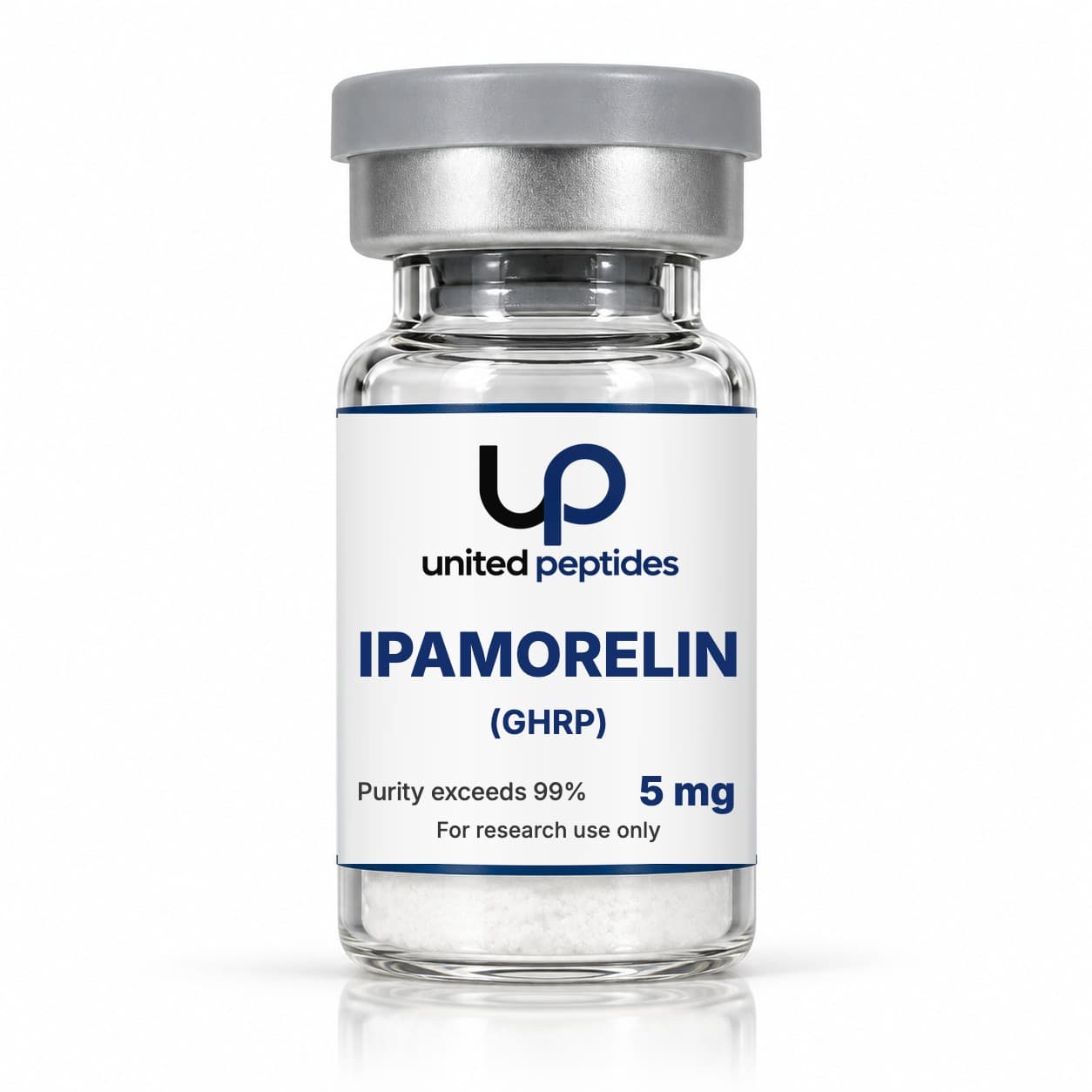
They are easiest to see written out. Ipamorelin is five residues and carries three separate defences at once: Aib in place of a natural residue at the first position, and two D-configured residues after it. Nothing about that sequence is accidental — each substitution removes a recognition site.
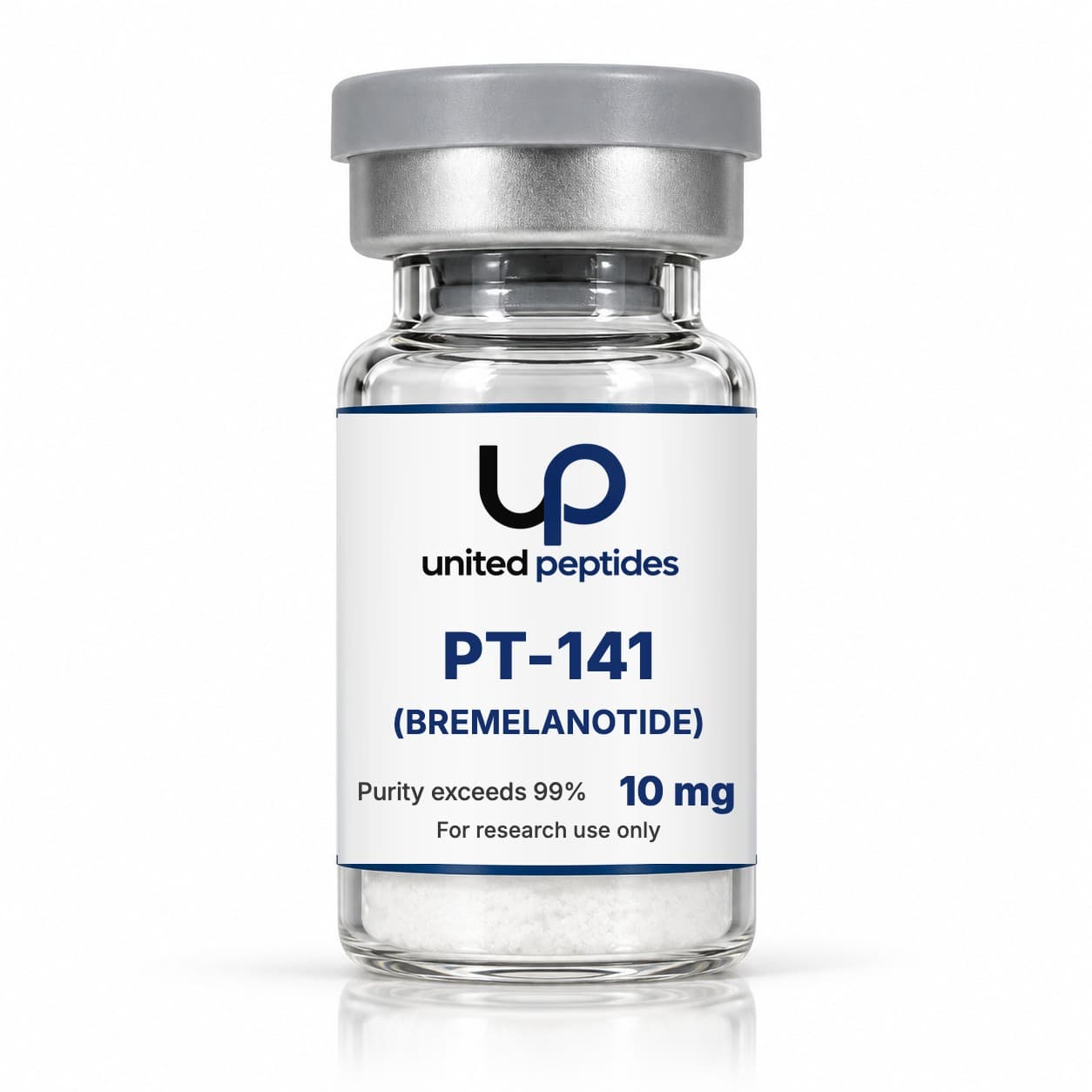
PT-141 takes the structural route instead. It is a cyclic heptapeptide closed by a lactam bridge between two side chains, with an acetylated N-terminus and a D-phenylalanine inside the ring. The ring removes the extended backbone proteases need and the free termini exopeptidases work from, in one move.
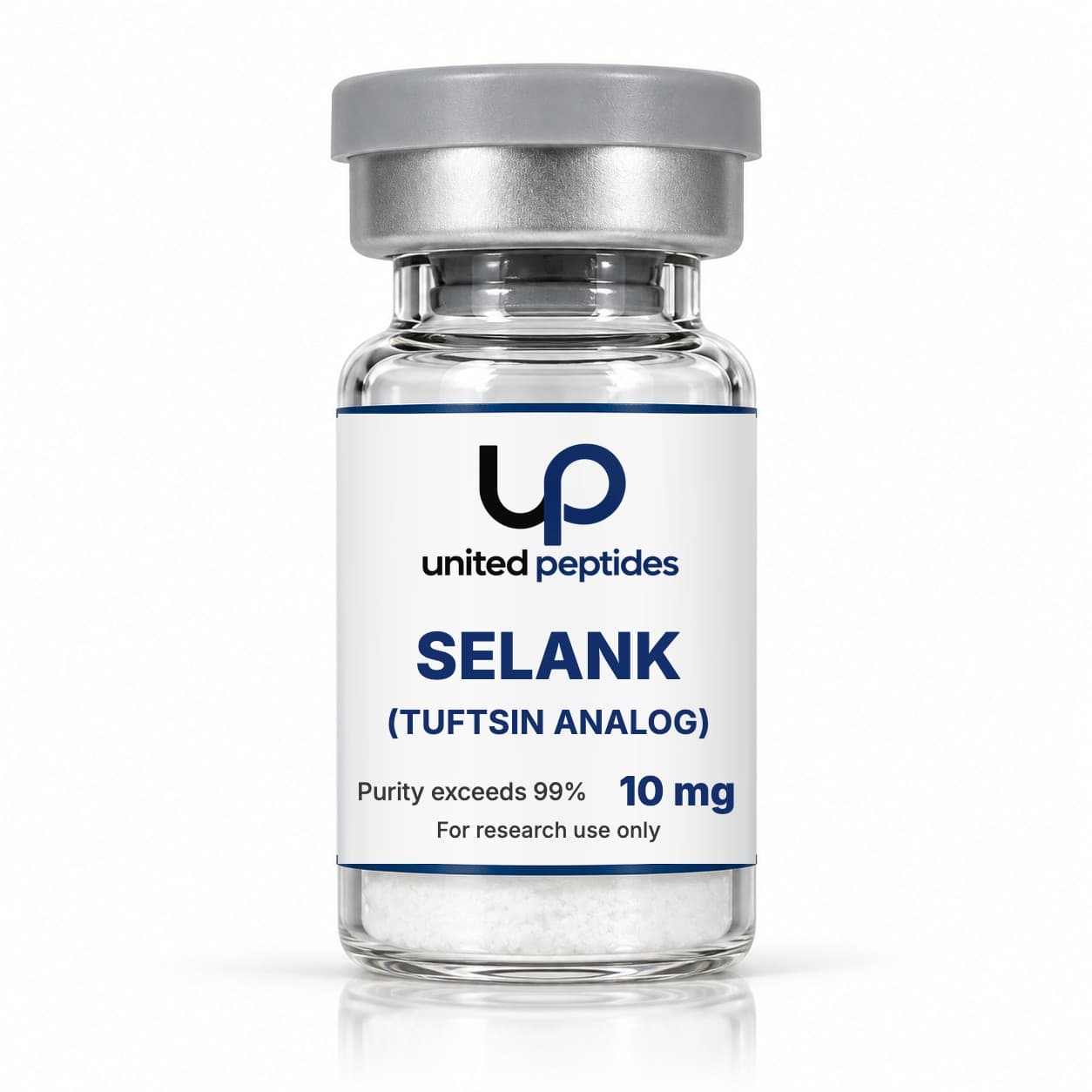
Selank shows the simplest version: a Pro-Gly-Pro tail appended to a natural fragment. Proline's ring geometry resists peptidase recognition, so a short tail of it protects the end of the chain without altering the active part. The same tail appears on an unrelated neuropeptide, which is a clue that it is engineering rather than inheritance.
Does resistance to proteases make a peptide more stable in the vial?
Not reliably, and conflating the two is a common error. Protease resistance is about enzymatic attack; shelf stability is about hydrolysis, oxidation and deamidation, which are chemical and proceed with no enzyme present. A heavily protease-resistant peptide carrying a methionine is still an oxidation risk in storage.
The two sets of liabilities are read from the same sequence but they are different lists. Engineering for circulation time does not automatically buy anything in the freezer.
What does this mean for handling research material?
Mostly that the same chemistry applies wherever a peptide meets a protease, not only in a digestive tract. Serum-containing culture medium carries peptidase activity, and a peptide can be substantially gone before an assay reads anything. The sequence that predicts gut cleavage predicts that too.
It also explains why a negative result needs a positive control. A peptide degraded before it reached its target produces exactly the same flat readout as a peptide with no activity, and nothing in the data distinguishes them.
Does lowering the pH of a buffer reproduce stomach conditions?
No, and the distinction is worth keeping clear. Acid alone unfolds a peptide and can hydrolyse particularly labile bonds, but the bulk of the damage in the stomach is enzymatic rather than chemical. A low-pH buffer used for solubility is not a digestion model and does not predict what pepsin would do.
Why does any of this matter for in-vitro work?
Because the same enzyme families appear in the systems research actually uses, at lower activity but over longer exposures. Serum carries peptidases; so do cell surfaces, which is the same brush-border chemistry described above in a different setting.
The practical consequence is that a peptide's measured potency in a serum-containing assay is a composite of its activity and its survival, and those two cannot be separated by the readout alone. A protease-resistant analogue can appear more potent than its parent purely because more of it is still present at the time of measurement.
That is a real difference and it is not a difference in receptor affinity. Distinguishing the two needs either a serum-free comparison or a measurement of how much intact peptide remains, and it is the kind of confound that quietly inflates structure-activity conclusions drawn from culture data.
Is the same true of every peptide in a catalogue?
The chemistry is, though the degree varies a great deal. A short sequence carrying several engineered defences resists far better than a long unmodified one, and a cyclic molecule resists better than either. None of that amounts to survival in the sense of reaching circulation intact.
What varies more usefully is relevance. For work conducted entirely in buffer, gut chemistry is background. For anything in serum or on cells, the same enzyme families are present and the sequence that predicts digestion predicts the assay. The question is not whether a peptide is protease-resistant in the abstract but whether the system it is going into contains the protease that matters for it.
One further implication is worth stating plainly, because it cuts against intuition. A peptide that degrades quickly is not a poor molecule; it is a molecule whose exposure is short, and short exposure is sometimes exactly what an experiment wants. Durability is a design choice with costs on both sides, not a universal virtue, and reading a sequence for its liabilities is as much about knowing what to expect as about avoiding anything.
All products referenced here are supplied for laboratory and research use only. They are not drugs, foods, supplements or cosmetics, and are not for human or veterinary use.