
Most research peptides carry no expiry date, and the dates they do carry usually mean something weaker than the word implies. An expiry date is a claim that material meets its specification up to a stated day, and that claim requires stability data to support it. Most research peptide suppliers have not generated that data, which is why the honest ones print a date of manufacture or a retest date instead.
Four dates, four different claims
The dates that appear on vials and certificates are not interchangeable, and the strength of what each one asserts varies enormously.
| Date | What it claims | Evidence behind it |
|---|---|---|
| Date of manufacture | When the batch was made | A production record; no claim about condition now |
| Date of analysis | When the sample was tested | The certificate itself; describes that day only |
| Retest date | When to re-measure before relying on it | A handling convention, often not stability data |
| Expiry date | Meets specification until this day | Real-time or accelerated stability studies |
Only the last of those is an expiry date in the sense the word is normally used, and it is the one you are least likely to see on a research peptide. That is not evasion. Generating stability data means storing a batch under defined conditions and re-testing it at intervals over months or years, which is a programme in its own right and is rarely run for material sold in milligram quantities.
What is the difference between a retest date and an expiry date?
An expiry date says the material is unfit after it passes. A retest date says nothing about fitness — it says measure again before you rely on it. The second is a much weaker claim and a much more honest one in the absence of stability data, because it puts the question back where the evidence is: a fresh measurement on the material in front of you.
The practical consequence is that a passed retest date is not a reason to discard a vial. It is a reason to confirm identity and purity before using it for anything that matters. A passed expiry date, where one genuinely exists and is backed by data, is a different situation.
Why do some vials carry no date at all?
Usually because the only defensible date is on the certificate rather than the vial, and the supplier has chosen not to print something that could be misread. A vial with a lot number and nothing else is not under-labelled if the lot number resolves to a document carrying the date of analysis. The label's job is to identify the material; the certificate's job is to date it.
Where this becomes a problem is when neither carries a date. A lot you cannot place in time is a lot whose storage history you cannot reason about, and storage history is most of what determines condition.
What actually degrades, and on what timescale
The question behind "has this expired" is really "has this changed", and the answer depends far more on form and storage than on elapsed time.
A sealed lyophilised solid at −20 °C is remarkably durable. Water, oxygen and light are all largely excluded at once, and the reactions that destroy peptides mostly need water. The useful horizon is measured in years rather than months, and the storage condition does more work than the calendar.
An opened vial is a different object. The seal advantage is spent and does not return, and a hygroscopic solid will take up atmospheric moisture given the chance. A reconstituted solution is shorter again — days to weeks refrigerated, months frozen in single-use aliquots, and shorter still for sequences carrying free cysteine or methionine.
Which sequences are the short-dated ones?
The ones carrying a chemically reactive residue. Methionine and free cysteine oxidise; asparagine deamidates, and does so fastest in an Asn-Gly context; tryptophan is a photo-oxidation site. The sequence predicts the liability before any storage decision is made, which is why two peptides stored identically can be in very different condition after a year.
Does a date on the box apply to the vial inside it?
Not necessarily, and this is worth checking when material arrives repackaged. A date printed on an outer carton can refer to the carton's contents as shipped rather than to the batch, and the two diverge whenever a supplier buys bulk material and fills smaller vials from it. The authority is the lot number on the vial and the certificate it resolves to; everything printed further out is convenience. Transcribing the lot from the vial rather than the paperwork on arrival is what keeps that chain intact.
Can a peptide be tested rather than guessed about?
Yes, and this is the answer the retest-date convention is pointing at. A fresh HPLC run reports purity as it is now rather than as it was at release, and a mass check confirms the molecule is still the one on the label. A trace also shows what the degradation looks like — a shoulder on the main peak, a new late-eluting species — which a single number cannot.
For material that matters, a re-measurement costs less than a result that has to be withdrawn later. For routine work on a sealed vial well inside its storage window, it is usually unnecessary.
The chemistry behind the clock
Three reactions account for most of what happens to a stored peptide, and each has a different trigger. Knowing which one a given sequence is exposed to is more informative than any date.
Hydrolysis cuts the backbone and needs water. It is why a sealed dry solid outlasts a solution by orders of magnitude, and why residual moisture in the vial is a stability question rather than only a mass question.
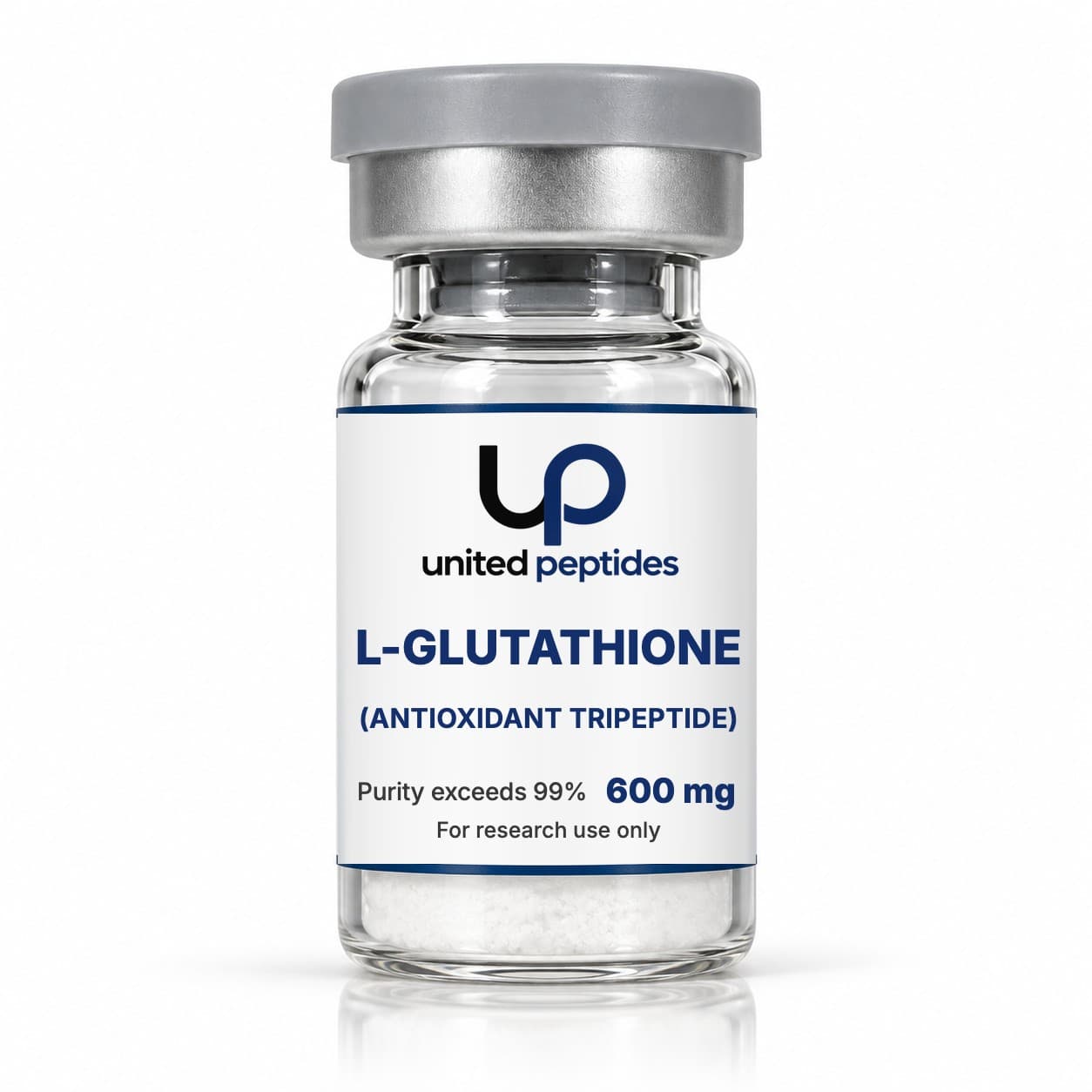
Oxidation attacks sulphur and aromatic side chains and needs oxygen, often helped along by trace metal. Methionine goes to the sulphoxide; free cysteine forms disulphide dimers. A thiol-containing compound such as glutathione is the clearest case — it oxidises in solution readily enough that the reaction is the headline fact about handling it.
Deamidation converts asparagine and glutamine to their acidic counterparts, shifting the mass by one dalton and the charge by rather more. It is fastest in an Asn-Gly context and it proceeds in dry solids as well as in solution, just more slowly.
None of these is visible. A degraded vial looks like an intact one, which is the entire reason the question gets asked in terms of dates rather than observation.
Do different compounds age at different rates in the same freezer?
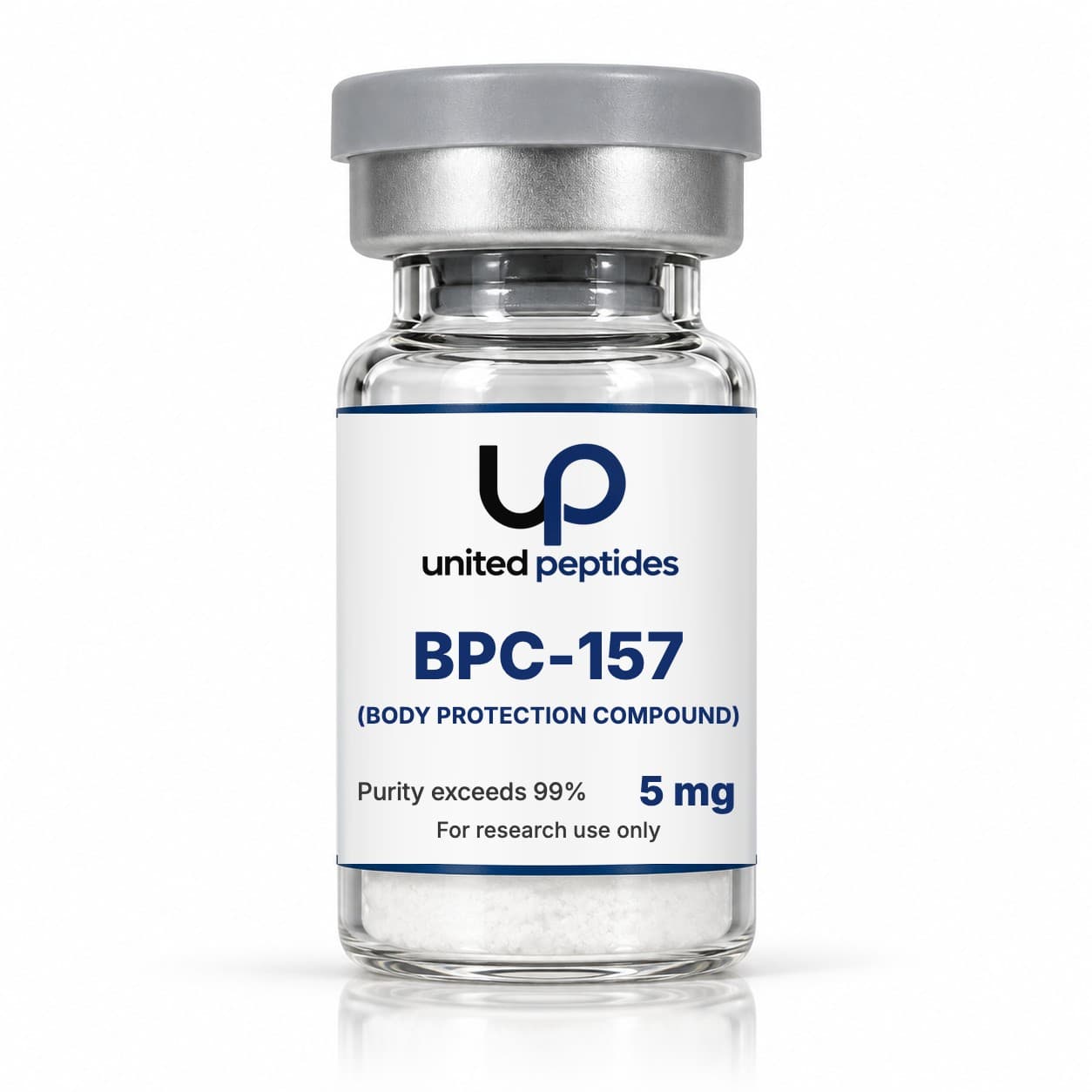
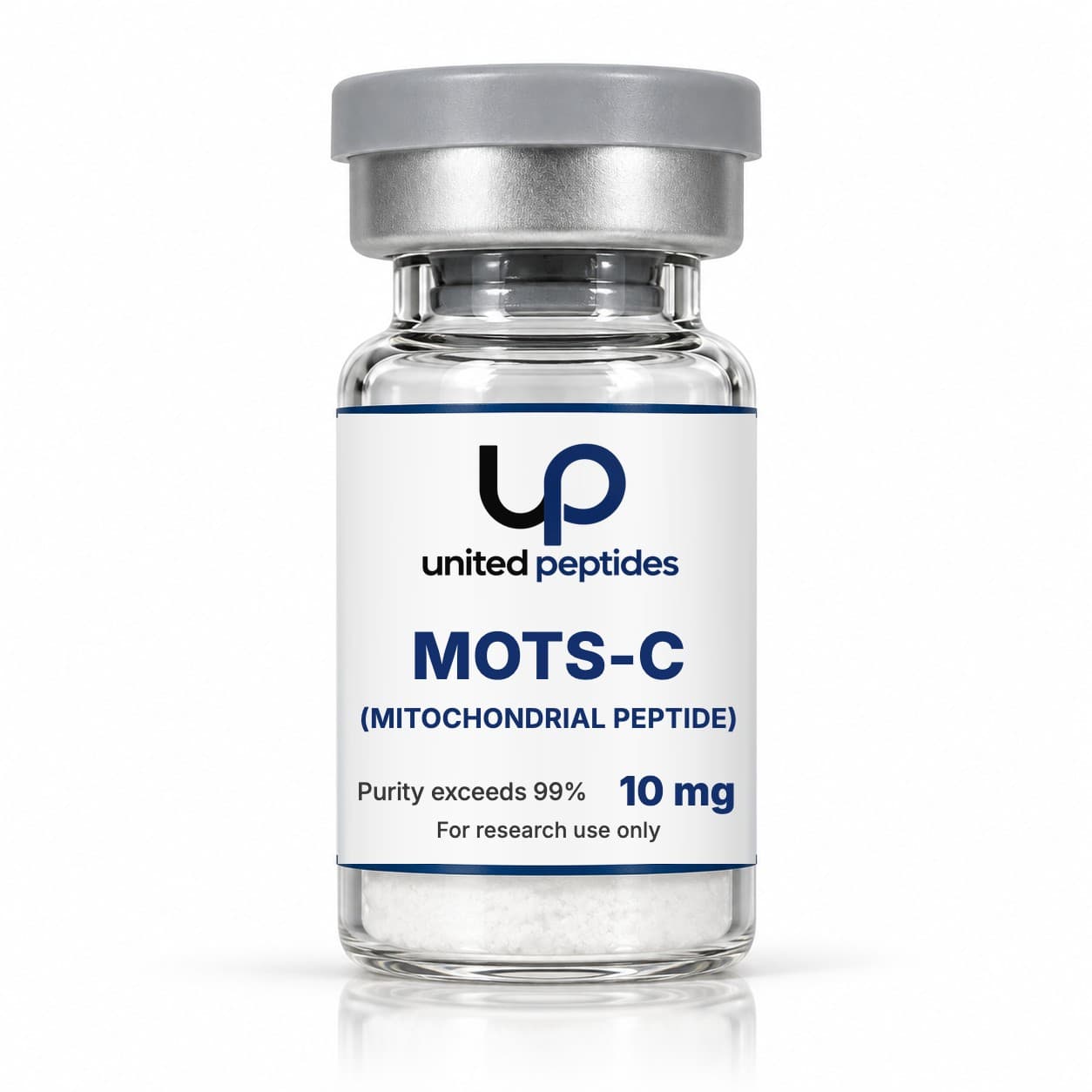
Substantially, and the sequence predicts most of it. A pentadecapeptide with no methionine, no free cysteine and no Asn-Gly has none of the three liabilities above and is about as durable as a peptide gets. A mitochondrial-derived peptide carrying methionine has one of them from the start.
Two vials bought together and stored side by side can therefore be in quite different condition a year later, with nothing in the storage to explain it. This is why a blanket shelf-life rule across a catalogue would be either too conservative for most of it or too permissive for some of it.
How to read the vial you have
Three questions settle it, in order.
- What date is actually printed, and on what? Manufacture, analysis, retest and expiry are four claims of different strength. If the label says only "date" without qualifying it, the certificate is where to look.
- What form is it in, and how has it been kept? A sealed solid stored cold is a different question from an opened vial on a shelf. This matters more than the date.
- Does the sequence carry a known liability? Met, free Cys, Asn-Gly or Trp shorten every horizon above.
A vial that is sealed, cold, well inside a plausible window and free of reactive residues needs no further thought. One that fails two of those tests is worth re-measuring before it informs anything. A supplier who cannot tell you which date they printed has answered a different and more useful question.
Should a date be recorded even when the supplier gives none?
Yes, and it is the cheapest traceability any laboratory can create. A receipt date written on the vial converts an undated object into one whose history has a start, which is enough to reason about everything after it. Without one, a vial found in a freezer in two years is unanswerable.
The fuller version adds the date the vial was first opened and the date it was reconstituted, because those mark the two points where the stability horizon shortens sharply. Three short dates on a label outperform any supplier-printed expiry, because they describe this vial rather than the batch it came from.
Where several vials of one compound accumulate from different orders, the receipt date is also what distinguishes them. The arrival record and the vial marking do the same job from two directions, and together they make a lot number useful rather than decorative.
All products referenced here are supplied for laboratory and research use only. They are not drugs, foods, supplements or cosmetics, and are not for human or veterinary use.