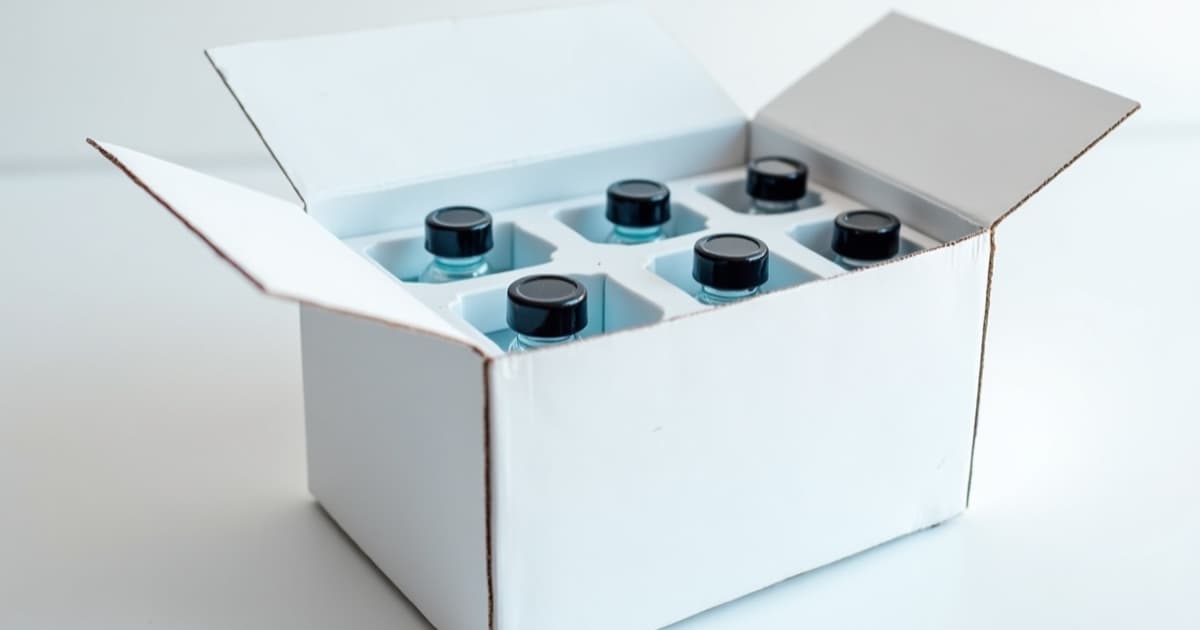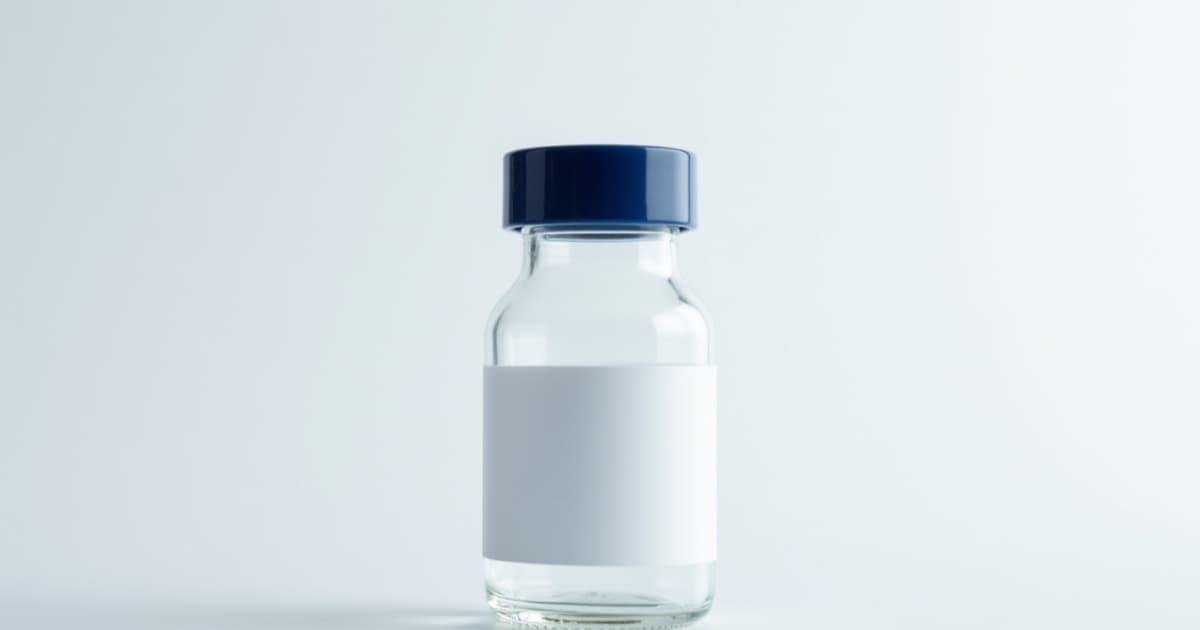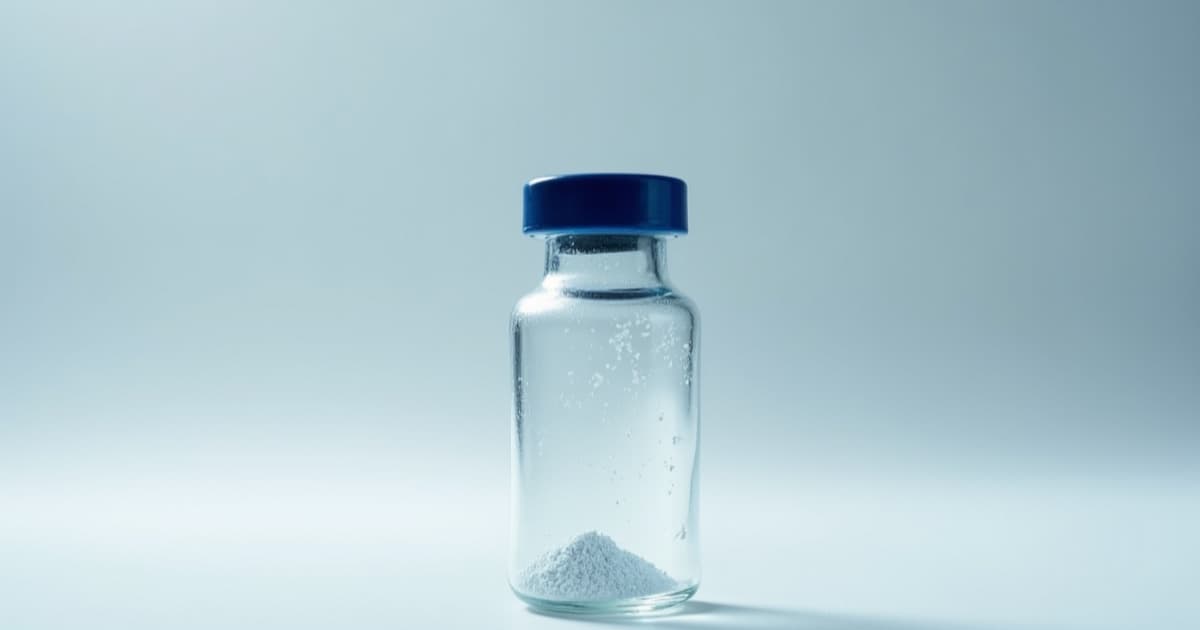
The five minutes after a box is opened are the only chance to record the material's arrival condition, and nothing recovers that information later. A vial that goes straight into the freezer unexamined enters your inventory with no documented starting point — so if a result looks wrong three months on, the question of whether the material was ever what it should have been cannot be reopened. The procedure below takes very little time and is almost entirely about creating a record.
What arrival checks can and cannot establish
It is worth being precise about this, because an arrival inspection is often credited with more than it does. Looking at a vial establishes almost nothing about its chemistry. What it establishes is a baseline — the condition in which the material entered your custody — and that baseline is what makes later questions answerable.
| Check | What to look for | What it establishes |
|---|---|---|
| Outer packaging | Crushing, puncture, water staining | Whether the box was handled roughly enough to warrant looking harder |
| Coolant state | Gel packs still cold, dry ice present or fully sublimed | Roughly how long the parcel has been at ambient temperature |
| Vial integrity | Cracks, chips at the crimp, a lifted or loose stopper | Whether the seal has been compromised — the one finding that is decisive |
| Cake appearance | Position and form of the solid; any liquid or oily film | Whether the vial has been warm enough to melt, or has taken up water |
| Label against order | Compound, quantity, lot number | That the material is what was ordered, and which certificate applies |
| Vacuum on first entry | A faint inward hiss when the stopper is first pierced | That the seal held in transit — checked later, at reconstitution |
Only two of these can condemn a vial on their own: a compromised seal and visible liquid where a dry cake should be. The rest are context, and context is what turns an ambiguous result later into a question with a documented answer.
What separates a warm arrival that is fine from one that is not?
Two observations, and neither is the temperature. The first is whether the solid is still a solid: a dry cake that arrived warm has met heat without water, which a sealed lyophilised peptide tolerates well. The second is whether the seal held. Warm, dry and sealed is an ordinary arrival; warm with liquid pooled in the vial, or warm with a lifted stopper, is not — in both of those the material has met moisture, and moisture is the actual mechanism. Why ambient transit is normal for dry material covers the general case; the point at arrival is simply to record which of the two situations you have, because that judgement cannot be made retrospectively.
What does the cake's position tell you?
Something about handling, and less about quality than people expect. A lyophilised cake forms where the solution was when it froze, so it normally sits as a disc at the base. A cake found up the vial wall or across the stopper was shaken hard, in transit or before it. By itself that is cosmetic: the material is the same mass of the same compound, and it dissolves identically. It becomes a finding only in combination — a displaced cake plus a stopper that does not look properly seated is worth a question in a way that either alone is not.
A collapsed or shrunken cake, or one that has gone glassy or translucent, is a different observation. That appearance suggests the material was warm enough for the solid to soften, which does bear on stability. And a barely visible film rather than an obvious cake is not a finding at all — a few milligrams of a low-density solid genuinely looks like almost nothing, and vials are routinely assumed to be empty when they are correctly filled.
The record worth making
Four items, written down at the bench rather than remembered, cover almost everything a later investigation would want.
- Date and time of arrival, and the condition of the coolant. This fixes the ambient-exposure window, which is the quantity nobody can reconstruct afterwards.
- Lot number, transcribed from the vial rather than from the invoice. The label is the authority here. A certificate describes one batch, and the vial is the only thing that says which batch you hold.
- A photograph of the vial and the cake. Thirty seconds, and it is the only form of evidence that survives the question being asked months later.
- The certificate, retrieved and matched to the lot now. Checking that the document exists while the shipment is still fresh is far easier than discovering its absence mid-experiment. Our lot records are searchable on the lot verification page, with the full library at Certificates of Analysis.
None of this is specific to peptides — it is ordinary sample-receipt practice. It is worth spelling out because peptides are bought in small quantities by small groups, where formal receiving procedures often do not exist and the vial goes from courier to freezer in one motion.
Should the lot number be checked against the certificate immediately?
Yes, and it is the single highest-value check in the list. The lot number is the only field that connects the document to the vial, and a mismatch is both consequential and easy to miss, because every other field on a certificate for the wrong lot will look entirely plausible. A document that cannot be tied to your batch describes someone else's material. This is also the moment at which a supplier's ability to produce a lot-matched certificate is tested in practice rather than in principle.
What belongs on the vial before it goes into storage?
The receipt date, at minimum, in a marker that survives freezer conditions. A manufacturer's label carries the compound, quantity and lot but nothing about your custody, and once several vials of the same compound from different orders are in one box, the distinction between them is gone. If the vial will be reconstituted and aliquoted later, the aliquots need their own labelling discipline — date, concentration and parent lot — because an unlabelled tube in a freezer is waste regardless of what it contains.
Is there any reason to open the vial on arrival?
No, and there is a good reason not to. An unopened vial is sealed and dry; opening it admits atmospheric moisture to a hygroscopic solid and starts a clock that was not running. The vacuum check is useful, but it belongs at the point of reconstitution, when the vial is being opened anyway. Everything in the arrival inspection is visible through glass.
All products referenced here are supplied for laboratory and research use only. They are not drugs, foods, supplements or cosmetics, and are not for human or veterinary use.