
Milligrams and micrograms are the same unit a thousand apart; international units are not a unit of mass at all and cannot be converted without a factor specific to the compound. Confusing the first pair costs a factor of a thousand. Confusing the second kind with the first produces a number that looks reasonable and means nothing, which is the more dangerous failure because nothing about it looks wrong.
What each unit actually measures
| Unit | Measures | Converts by |
|---|---|---|
| mg (milligram) | Mass | Arithmetic: 1 mg = 1,000 µg |
| µg or mcg (microgram) | Mass | Arithmetic: 1,000 µg = 1 mg |
| IU (international unit) | Biological activity | Only by a compound-specific factor, if one exists |
| mg/mL | Concentration | Mass divided by volume |
The first two rows are a scale change and nothing more. The third row is a different kind of quantity. An international unit is defined by what a substance does in a specified assay against a reference preparation, not by what it weighs, and the conversion factor between IU and mass is a property of that particular substance.
Why can IU not be converted the way mg and mcg can?
Because there is no universal constant to convert with. The IU was created for substances where purity and composition varied enough that mass was an unreliable proxy for activity, so activity itself became the unit. Each substance that uses IU has its own defined relationship to mass, fixed by an international reference standard, and that relationship does not transfer to any other substance.
So "how many mg is an IU" has no general answer. It has a per-compound answer, where one has been established, and no answer at all for compounds that were never assigned an IU in the first place — which is most research peptides.
Why do some peptides get quoted in IU anyway?
Usually by inheritance rather than by definition. A compound adjacent to one that genuinely uses IU can pick up the convention in casual usage, even though no reference standard exists for it and no conversion factor has been defined. The number then circulates as though it were meaningful.
The test is simple: if nobody can name the reference preparation the unit is defined against, the IU figure is not a unit, it is a habit. Treat the mass on the certificate as the real quantity and ignore the rest. A certificate reports mass and content, not activity, precisely because mass is what was measured.
The conversion that actually matters
For research peptides the useful arithmetic is mass to concentration, and it is short. Reconstitute a vial in a known volume and the concentration is mass over volume. A 5 mg vial in 2 mL is 2.5 mg/mL, which is also 2,500 µg/mL. Those are the same number written twice.
Two corrections sit on top of that and both are easy to forget. The first is net peptide content: the label mass is the mass of powder, not the mass of peptide, and the difference is routinely 10–30%. The second is that equal mass is not equal molecules — if the experiment is about receptor occupancy rather than mass delivered, molarity is the quantity that matters and it depends on molecular weight.
What is the most common unit error in practice?
A factor of a thousand, from writing µg where mg was meant or reading a figure off a label in one unit and a protocol in another. It is the easiest error to make and the easiest to catch, because the result is absurd rather than subtly wrong: a stock a thousand times too concentrated usually will not dissolve, and one a thousand times too dilute produces no effect at any concentration tested.
The habit that prevents it is writing the unit next to every number at the point it is recorded, including in intermediate working. A bare "5" in a notebook is a question; "5 mg" is a fact.
Is mcg the same as µg?
Yes. "mcg" is a transliteration of µg used where the Greek letter is awkward to type or at risk of being mangled in transfer between systems. They are the same unit and the substitution exists for typographic reasons, not chemical ones. The risk it carries is small but real: "mg" and "mcg" differ by one character and by a factor of a thousand, which is why many laboratories write micrograms out in full in any document a person will read quickly.
How should a concentration be recorded so it cannot be misread?
Mass, volume and the resulting concentration, all three, with units on each. Recording only the concentration hides whether the volume was the one intended, and the delivered volume is frequently not the nominal one. Recording all three means an error at any step is recoverable later rather than invisible.
Where net peptide content has been applied, record that too, with the figure used. A stock labelled "2.5 mg/mL" is ambiguous about whether the correction was made; "2.5 mg/mL peptide, corrected at 82% content" is not.
Working an example through
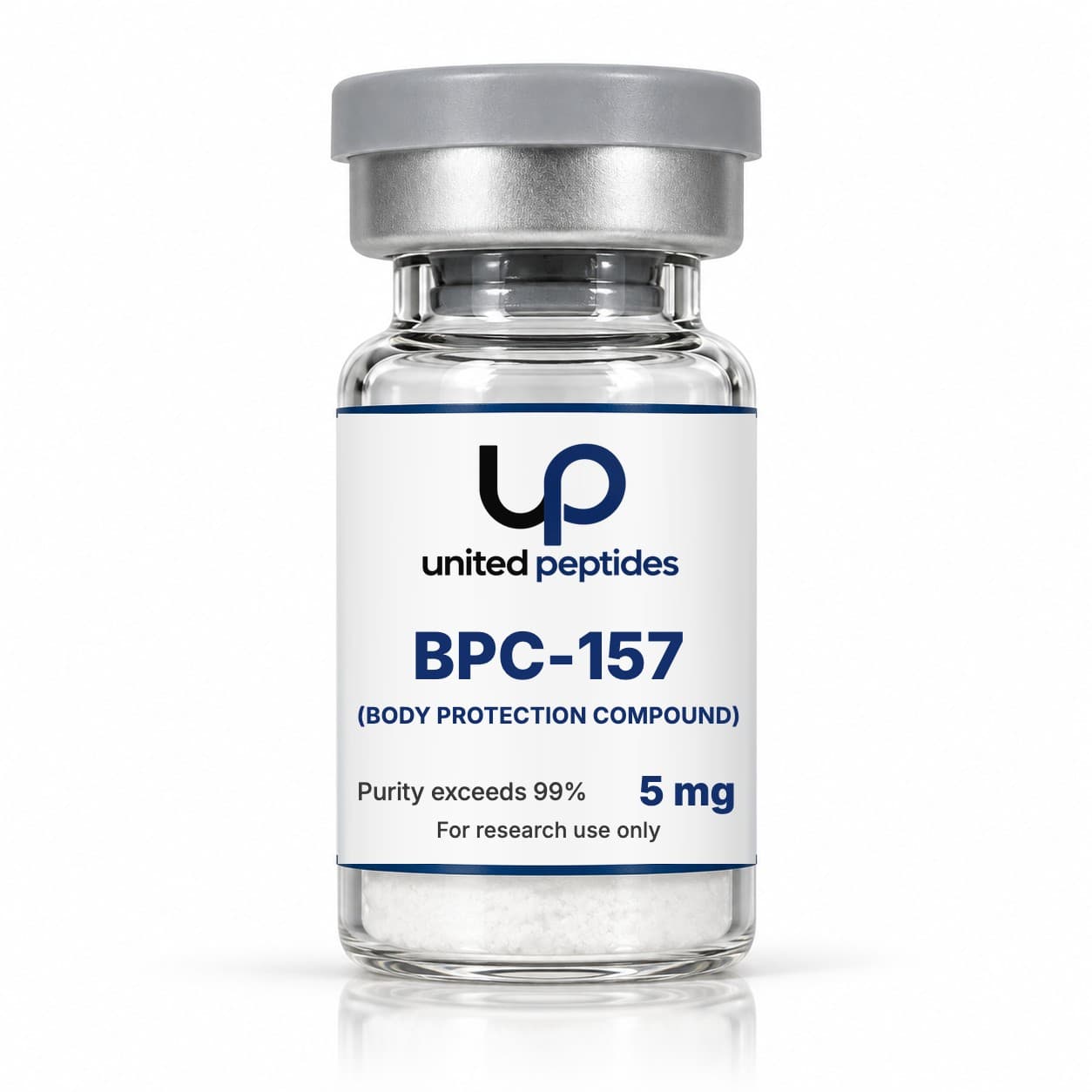
The arithmetic is easier to trust once it has been done once with real numbers. Take a 5 mg vial and suppose the certificate reports net peptide content of 82%.
The powder is 5 mg. The peptide in it is 5 × 0.82 = 4.1 mg. Reconstituted in 2 mL of bacteriostatic solution, the nominal concentration is 2.5 mg/mL and the actual peptide concentration is 2.05 mg/mL, which is 2,050 µg/mL.
If a protocol calls for a true 2 mg/mL stock, the cleaner route is to work backwards from the peptide mass rather than correcting afterwards: 4.1 mg ÷ 2 mg/mL = 2.05 mL of solvent. The correction is then applied once, at the vial, instead of being remembered at every subsequent dilution.
Why work backwards rather than correcting later?
Because a correction applied downstream has to be applied every time, and the one occasion it is forgotten is invisible. A stock whose concentration is true at the moment it is made needs no further thought, and anyone picking up the tube later inherits a number that means what it says.
It also survives the write-up better. "2 mg/mL" in a methods section is unambiguous; "2.5 mg/mL nominal, 82% content" requires the reader to redo arithmetic the author already did, and a calculator handles the volume if the content figure is entered.
Does this change for a larger vial?
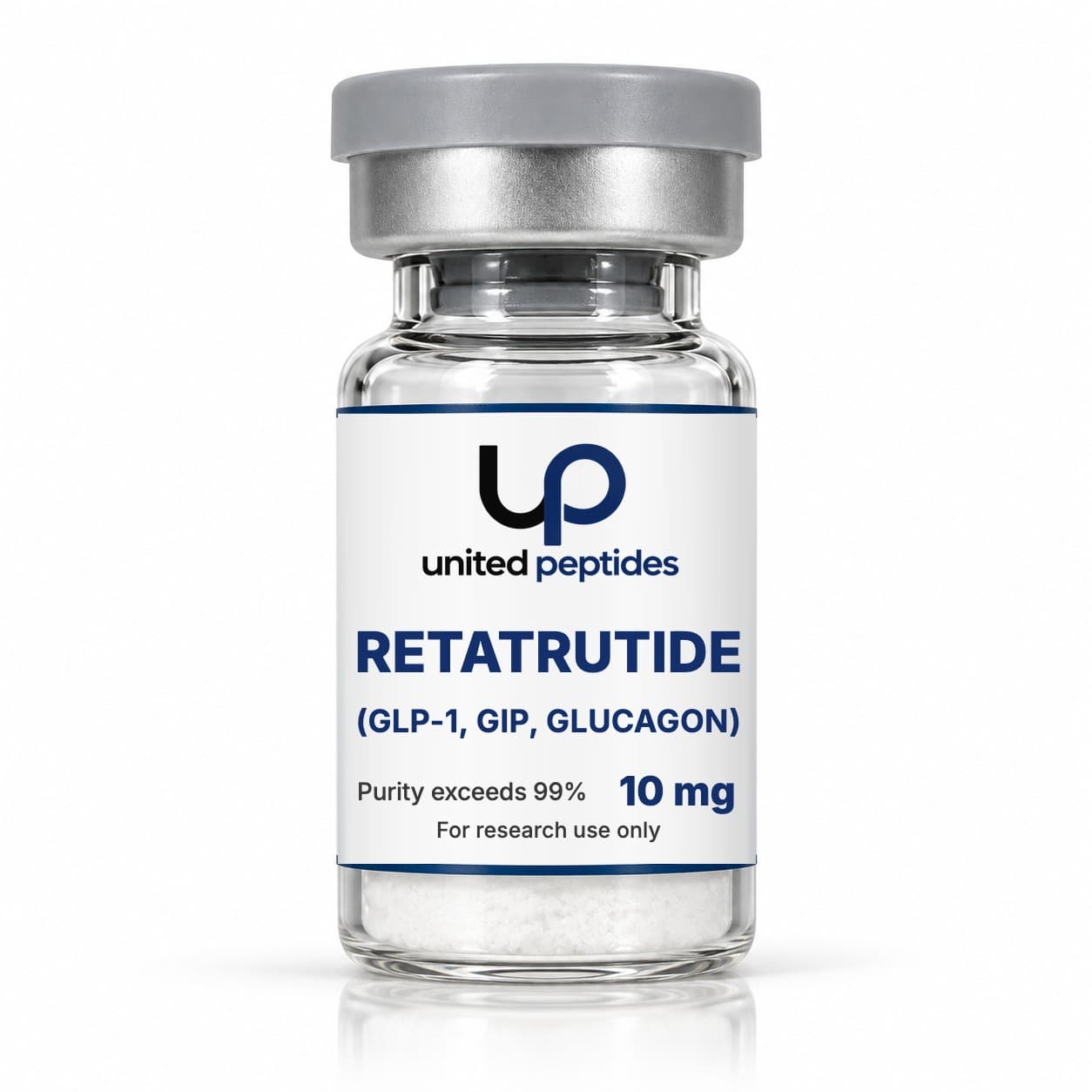
Only in scale. A 10 mg fill at the same content figure holds 8.2 mg of peptide, and the same backwards calculation applies. What does change is the cost of an error: the same percentage mistake wastes twice as much material, and a larger vial is more likely to be entered repeatedly, which brings the condition of the stopper into the picture alongside the arithmetic.
A short checklist for a label you have not seen before
Read the unit before the number. If it is mg or µg, the arithmetic is scaling and nothing else. If it is IU, find out what reference standard defines it for that specific compound before using the figure for anything — and if no such standard can be named, treat the mass on the certificate as the only real quantity on the document.
Then check what the mass refers to. A label states the nominal fill, and the certificate states how much of that fill is peptide. Those are different numbers and the second is the one calculations should start from.
What about concentrations written as percentages or ratios?
They appear occasionally and they are worth converting immediately rather than carrying. A solution described as 0.1% w/v is 1 mg/mL, because one percent weight-per-volume means one gram per hundred millilitres. A ratio such as 1:1,000 means one part in a thousand, which is again 1 mg/mL if the starting material was neat.
Both notations are legacies from contexts where they were unambiguous, and both lose that property as soon as they move between documents. Converting to mass per volume at the point of reading removes the ambiguity permanently and costs one line of arithmetic.
The same reasoning applies to anything expressed as a dilution factor without a starting concentration. "Diluted 1:10" describes an operation, not a concentration, and a series of such operations is only recoverable if the stock it began from was written down in absolute units.
Does the unit on the label match the unit on the certificate?
It should, and it is worth confirming once rather than assuming. A label states a nominal fill, conventionally in milligrams, while a certificate may report content as a percentage, as a mass, or as both. Those describe the same vial in different terms and they are easy to read past each other.
Where the two genuinely conflict — a label in one unit and a certificate in another that does not reconcile — the certificate is the measured document and the label is the intended fill. The label carries identity; the certificate carries quantity.
All products referenced here are supplied for laboratory and research use only. They are not drugs, foods, supplements or cosmetics, and are not for human or veterinary use.